Material Composition & How They Work
When selecting a low-slope roofing system for commercial buildings in Colorado, two common membranes are TPO (Thermoplastic Polyolefin) and EPDM (Ethylene Propylene Diene Monomer). Both are single-ply membranes, but their chemistry and performance characteristics differ significantly.
TPO: The Reflective Powerhouse
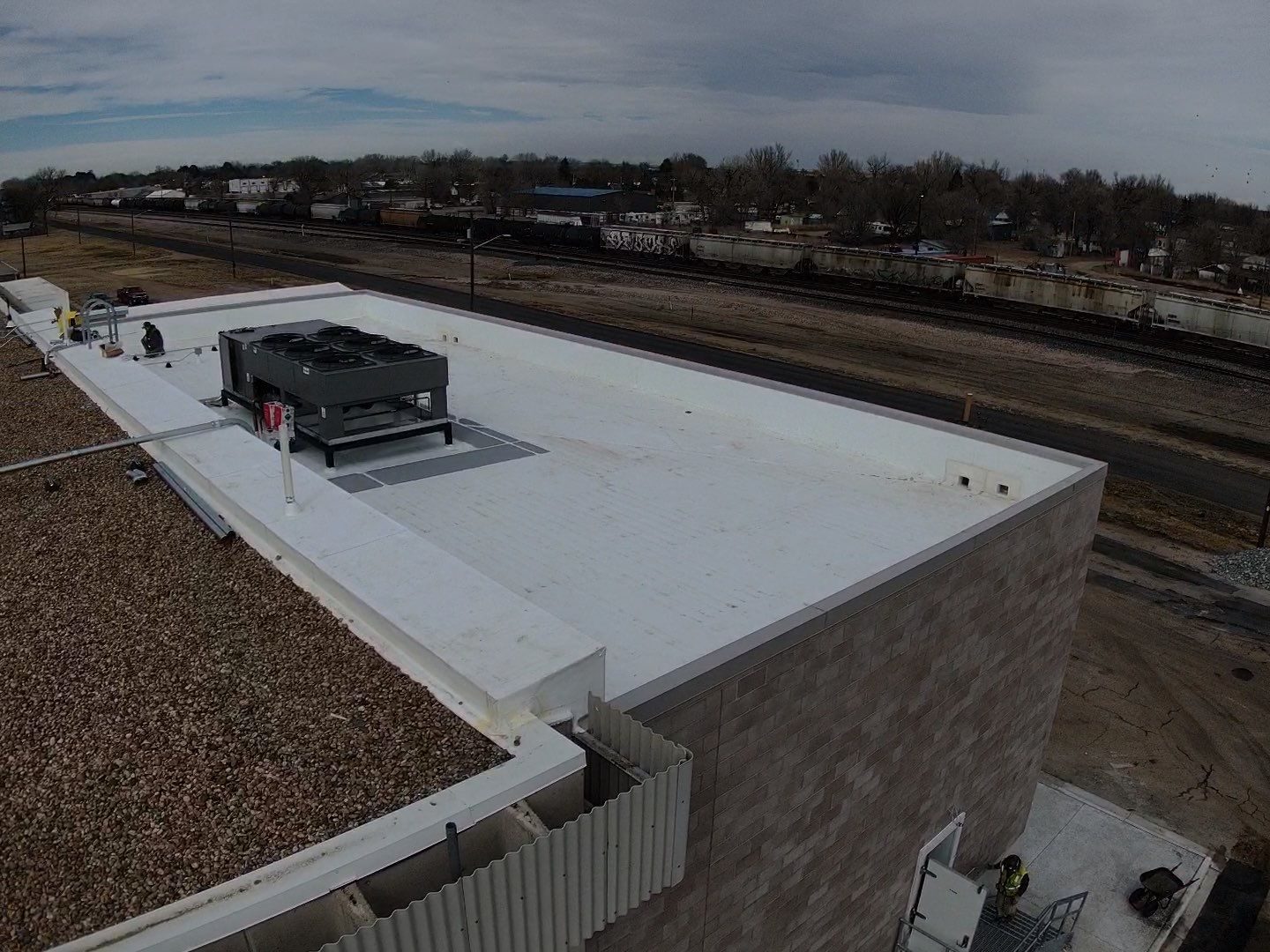
TPO is a blend of polypropylene (plastic) and ethylene-propylene (rubber). It is typically reinforced with a polyester scrim for strength. Its most defining feature is its bright white reflective surface, which is designed to reflect UV rays and reduce cooling costs.
EPDM: The Durable Rubber
EPDM is a synthetic rubber membrane known for its durability and flexibility. It resembles an inner tube and is typically black, though white options exist. It has been used on commercial roofs for decades.
Performance in Colorado’s Climate
Colorado’s environment is hostile to roofing materials. We face high-altitude UV exposure, rapid temperature swings, and severe hail.
Altitude & UV Exposure
At Denver’s elevation, and higher in the mountains, UV exposure is stronger than at sea level. TPO’s reflective surface helps protect the building from heat gain, but the membrane itself must be formulated with high-quality UV stabilizers to prevent degradation.
Freeze-Thaw Cycles
Colorado temperatures can swing sharply within a day. This thermal shock causes materials to expand and contract. EPDM handles this well; its rubber structure stretches and recovers with thermal movement.
Seam Strength & Waterproofing
Seams are a key detail on any membrane roof.
- TPO Seams: TPO seams are hot-air welded. This fuses the sheets together at a molecular level, creating a continuous welded seam.
- EPDM Seams: EPDM seams are adhered using primer and seam tape. While modern tapes are excellent, they are chemically bonded, not fused, and can need attention over time.
Installation Methods & Complexity
Both systems can be mechanically attached (screwed down) or fully adhered (glued).
- Mechanically Attached: Faster and cheaper, but the membrane flutters in high winds.
- Fully Adhered: costs more but generally offers higher wind uplift resistance, which matters along the windy Front Range.
Energy Efficiency & Cost Savings
TPO’s white surface reflects much of the sun’s heat, which can lower cooling loads in summer. However, in Colorado’s cold winters, a black EPDM roof can absorb heat, helping melt snow and reduce heating costs. In Colorado, the net energy difference is usually smaller than in hotter climates.
TPO vs EPDM Comparison Table
| Feature | TPO (Thermoplastic) | EPDM (Rubber) |
|---|---|---|
| Primary Benefit | Reflectivity & Energy Savings | Durability & Hail Resistance |
| Seam Technology | Heat Welded (Fused) | Seam Tape (Adhered) |
| Hail | Can become more vulnerable as it ages | Flexible rubber handles impacts well |
| Maintenance | Low (check for punctures) | Low (check seams) |
Which System Is Right for Your Building?
- Choose TPO If: Your priority is energy efficiency, cooling costs are high, or you have rooftop units emitting grease/oils (TPO is chemically resistant).
- Choose EPDM If: Your building is in a severe hail zone or in a high-mountain climate with large temperature swings.
Why Elevate Certification Matters
Regardless of the membrane, the warranty matters. Blue Peaks Roofing is certified with Elevate, so we can install Elevate TPO and EPDM systems and explain the manufacturer warranty options available for your building.
What working with us looks like: We inspect your roof for free and give you a written scope before any work starts. A dedicated project manager plans the work around your tenants and operations, keeps you updated every day and walks the finished job with you. Call (303) 808-0687 or schedule a free inspection.